

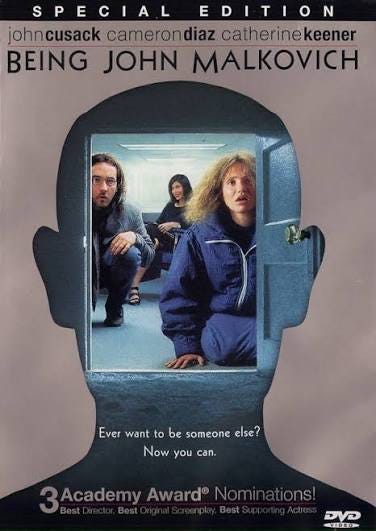
The Importance of Being Ernest (or John Malkovitch)
Titles are more than mere monikers, they’re your first marketing tool. Titling is far more important than some believe. This is one of the first ways your story is communicated, and we all know the old saying about the importance of first impressions. It isn’t just in order to make a good impression, it’s to avoid a bad one. If you choose to go to a movie and it turns out to be something completely different than what you expected, you may not appreciate that movie. Good titling sets up expectations, informs its potential audience, and serves the story and film well in the marketplace.
No one is more keenly aware of this than Stephen King, whose title for the film adapted from his work, RITA HAYWORTH AND THE SHAWSHANK REDEMPTION:
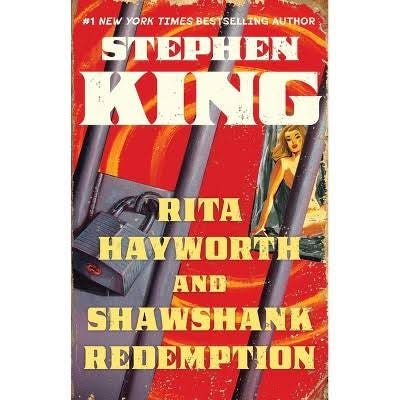
was seen by him (and others) as the reason this fine film failed at the box office. Cutting it to the final three words wasn’t enough. There are numerous other examples of titles that were the reason a film soared or bombed at the box office (though, since its initial release it has become a massive cult favorite, scoring 9.3/10 on IMDb).
I once had a semi-successful writer tell me titles didn’t matter. “After all,” he said, “The publisher changes them, anyway.” His, they did. Another writer I know was not so cynical. He had a knack for good titles. He once called a Young Adult book about an alien “ringer” on a high school basketball team, THE GREEN RECRUIT. Any title that does double duty is alright by me.
Titles offer the opportunity to “say” something about the work, something that adds to the meaning, adds to the mystery or allure. And, when well chosen, they’ll stick in your viewer’s craw so that when the time comes, they’ll sell the ticket.
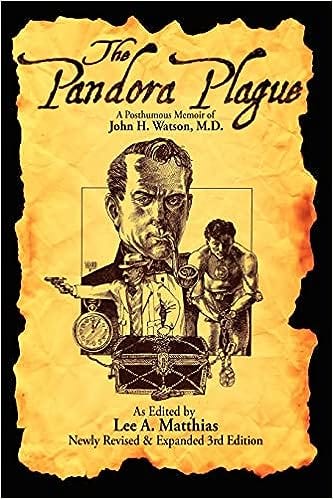
Titling is a case where the “less is more” maxim applies equally alongside the “bigger the better” maxim. Brevity before all else inevitably leads to same-sounding titles. I used to joke about the Robert Ludlum books because they were all three word titles beginning with “The,” followed by a name, and then a noun or descriptor (THE GEMINI CONTENDERS, THE SCARLATTI INHERITANCE, THE BOURNE IDENTITY, and on and on); I used to say he should name the next one THE LUDLUM BOOK, or THE DOE PROGNOSTICATION, even THE THREE WORDS. It got so dull and same-sounding I couldn’t distinguish one from another a week later, even though they were big sellers. The gimmick worked for awhile, but after so much use, it got lost in its own excessive brevity (how’s that for an oxymoron?). Still, three word titles with name and modifier are used today successfully, and I have even used The Ludlum Method myself: THE PANDORA PLAGUE:
I have had a similar problem of forgetting the title mere minutes after reading it with the terrific Jack Reacher novels by Lee Child. They are the Achilles Heel of Child’s books.
Action screenwriter, William C. Martell has written that “Titles are the first example of your creativity a producer will ever see.” He has published a list of titling tips that is generally very useful, arguing, among other things, that titles should:
Reflect the story’s tone and genre
Condense or grow from the story
Be idiot proof (doesn’t confuse or mystify them)
Be catchy, easy to say, roll off the tongue, have a rhythm
Pass the parking lot test – You can tell someone the title across the theater parking lot and they’ll get it even if they haven’t heard of it.
Use jargon (from the universe of the story)
Serve double-duty (like THE GREEN RECRUIT)
Short is preferred
I like his suggestion to use parts of clichés: “We don’t want our title to be bland! So use part of (a) cliché to create a riddle. EVER AFTER is a good example, as is AT FIRST SIGHT and DEEP BLUE SEA and THE HAND THAT ROCKS THE CRADLE. We know that it’s LOVE at first sight, giving this script a romantic identity.” He rightly prefers “power words” in his titles, saying, “If the three words I call my script are boring, imagine how boring 110 pages of my words will be!”
He repeatedly refers, however, to titles with, “these two or three little words,” and “it’s only a couple of words.” He states that his favorites are “catchy phrases” and “power words” from within the arena of the story such as CRASH DIVE, UNREASONABLE FORCE, LAST CALL, and HARD RETURN. At one point, earlier, he complains that the use of quotes in titles is flawed because the reader/viewer needs to know the quote. But then, in this case, he favors using phrases from story “arenas” (“inside-baseball” kinds of phrases) even though the reader/viewer may be unfamiliar with the arena. For my part, I don’t believe the audience needs to know something to find it appealing or memorable—I didn’t know what a “Blade Runner” was, but I thought it sounded cool. But the set of 2–3 word title choices is small enough that I am not as crazy about Martell’s preference for short titles. There are only so many short, punchy, on-the-nose (or almost) titles available, and Martell will run out of them or find them lost in masses of shoe-horned together power words (of the HARD TARGET ilk) very quickly. While short titles have real power and hang in memory, good titles can come in all stripes.
Defending Your Good Name
So hang the rules! I believe a good title is one which is often short, but can be incredibly long and still be great: EVERYTHING YOU ALWAYS WANTED TO KNOW ABOUT SEX, BUT WERE AFRAID TO ASK--(no one needed the Dr. David Rueben bestseller to choose to go see Woody Allen’s movie, Rueben’s title was enough); DR. STRANGELOVE: OR HOW I LEARNED TO STOP WORRYING AND LOVE THE BOMB; IT’S A MAD MAD MAD MAD WORLD; THE RUSSIANS ARE COMING, THE RUSSIANS ARE COMING, etc.). When it comes to longer titles, people shorten them for conversation and recollection anyway: “Did you go see THE RUSSIANS ARE COMING?” “I’m gonna catch MAD MAD WORLD tonight!” And everyone just calls the first example, DR. STRANGELOVE in discussion and remembrance.
A good title is one which is right for the moment. Well-titled stories are spotted instantly. They are appreciated right down there on the gut level. They work for you, or they don’t. I suppose they’re like all examples of art, good or bad: you know them when you see (or hear) them. THE SOUND OF MUSIC just wouldn’t “resonate” today. It’s too bland. Ditto, for THE BEST YEARS OF THEIR LIVES (an expression mostly out of use), THE RUGGLES OF RED GAP (too quaint), 2001: A SPACE ODYSSEY (sounds like an IMAX title). Yet all of these were big in their time. Would URBAN COWBOY, THE ELECTRIC HORSEMAN, or SATURDAY NIGHT FEVER make it today? The western-cool craze has passed for the most part, and disco is dead (I hope), so these are unlikely to work today. But they were strong once.
A good title has some kind of punch or impact without me having to already know the film.
A good title relates specifically to the film’s theme or story, and doesn’t tell the point in an obvious, on-the-nose way.
And I believe a good title usually does stand out when it quotes, provided the quote is an apt one—not necessarily a recognizable one, just potent in its own right. The association to the source is not essential. After all, there was a reason it became a quote originally: it said something particularly well outside the context of the original source. That can be reason enough to use it again.
I lifted the title of a Goya etching for a script I wrote, THE SLEEP OF REASON,
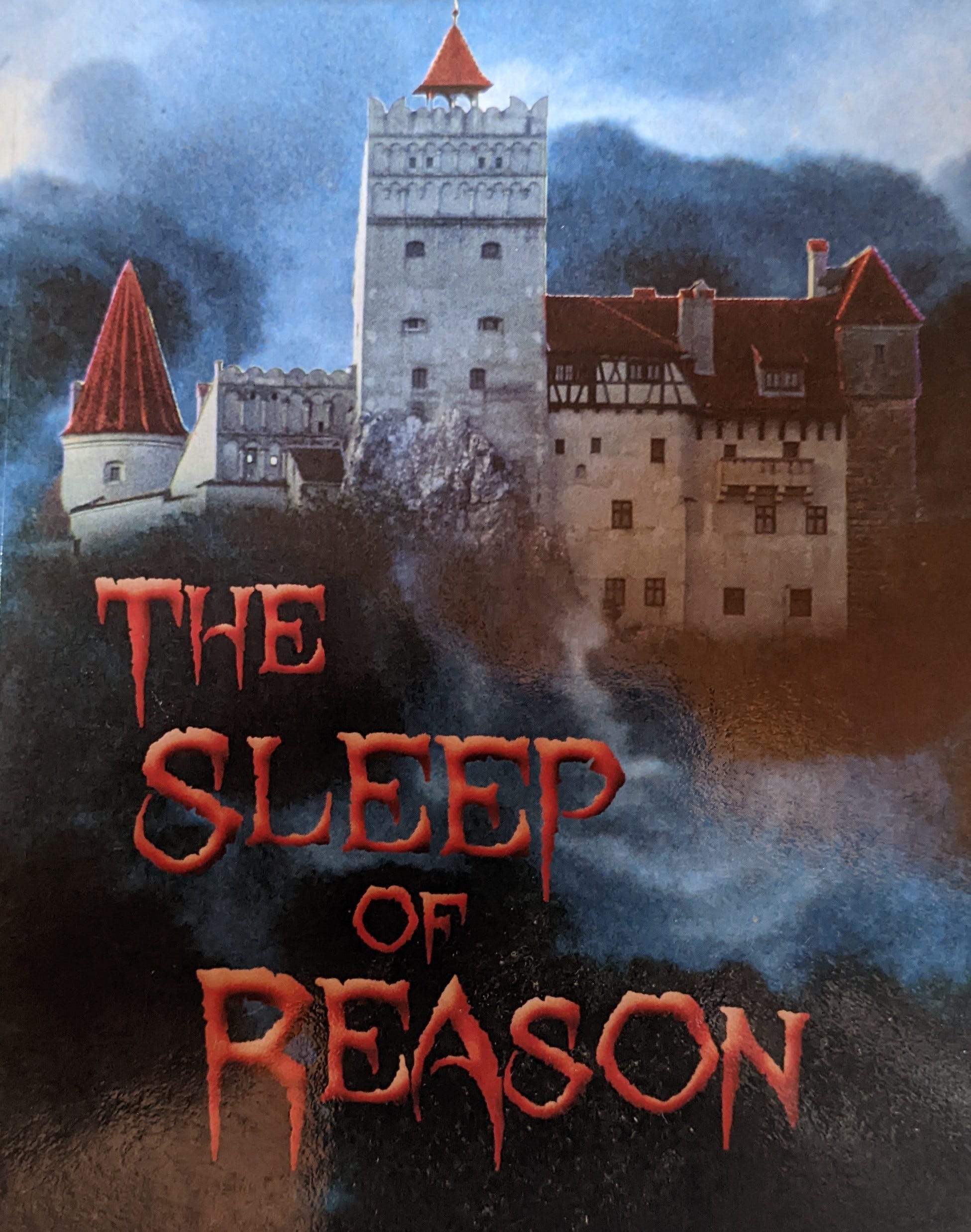
because:
It has a formal and literal connection (the story is about a descent into madness).
It is metaphoric, a quality in keeping with a dark-toned film (sleep is another word for death—THE BIG SLEEP, “sleeping with the fishes”, etc.).
It evokes imagery in common with a horror film (Goya’s etching depicts monsters).
It has a poetic quality to it (both in cadence and in word type).
It has a classic, older, cultured sound to it (due to its formal phrasing—“THE blank OF blank”, and choice of words—REASON connotes civility, intellect, normalcy, and positive-thinking while SLEEP implies the reverse, a descent into a kind of reason-oblivion, of non-thinking, where un-reasonable dreams occur).
The script is a classic approach to a vampire film, not the more common variety today of popular schlock, hip, or parody, each of which it had to stand out from or risk mis-cueing the very “niche-y” and parochial vampire film fans out there, not to mention the mainstream crowd who would’ve avoided any of those. Its original title, IMPALER, seemed to me to sound too “edgy” and violent, more in the “vein” of THE HUNGER and the BLADE films, i.e., too hip. Finally, as I’ve pointed out, the title doesn’t require familiarity with the Goya work to grasp the quality and classicism it evokes. So, I defend the choice despite straying from an absolute devotion to Martell’s title ideal.
Naming Names
Strolling through the bookstore you come across the New Arrivals table. On it are the hot new books each of which is destined to become a classic. Here are their author’s first choices of titles for them:
THE COPPERFIELD SURVEY OF THE WORLD AS IT ROLLED
BEAUTY AND ASHES
JOHN THOMAS AND LADY JANE
CHAPTERS IN THE LIFE OF A YOUNG MAN
CAIN MARK
TRIMALCHIO IN WEST EGG
COUPLES AND HOUSES AND DAYS
Any catch your eye?
Respectively, here are the titles the same books were published under:
DAVID COPPERFIELD, by Charles Dickens
OF HUMAN BONDAGE, by W. Somerset Maugham
LADY CHATTERLEY’S LOVER, by D. H. Lawrence
PORTRAIT OF THE ARTIST AS A YOUNG MAN, by James Joyce
EAST OF EDEN, by John Steinbeck
THE GREAT GATSBY, by F. Scott Fitzgerald
COUPLES, by John Updike
Publishers and Producers have unwritten rules about the titles of the works they sell (when considering the lists below, don’t ignore a good title by dismissing an unliked movie):
Rule 1) Keep it short, or, failing that, make it memorable:
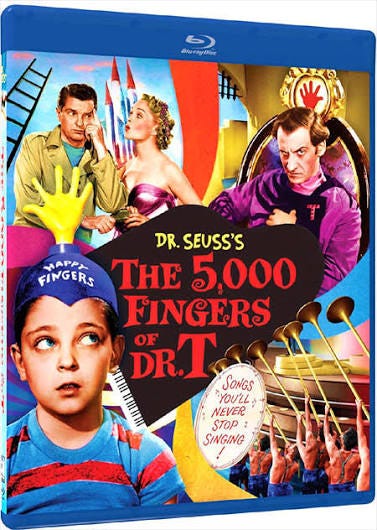
GHOSTBUSTERS
CASABLANCA (original title, EVERYBODY COMES TO RICK’S)
TOOTSIE
PSYCHO
SEVEN
SAW
BIG
Π (PI)
THE 5,000 FINGERS OF DR. T
THE TEXAS CHAIN SAW MASSACRE
DR. STRANGELOVE: OR HOW I LEARNED TO STOP WORRYING AND LOVE THE BOMB.
EVERYTHING YOU ALWAYS WANTED TO KNOW ABOUT SEX BUT WERE AFRAID TO ASK.
Rule 2) Titles should raise questions:
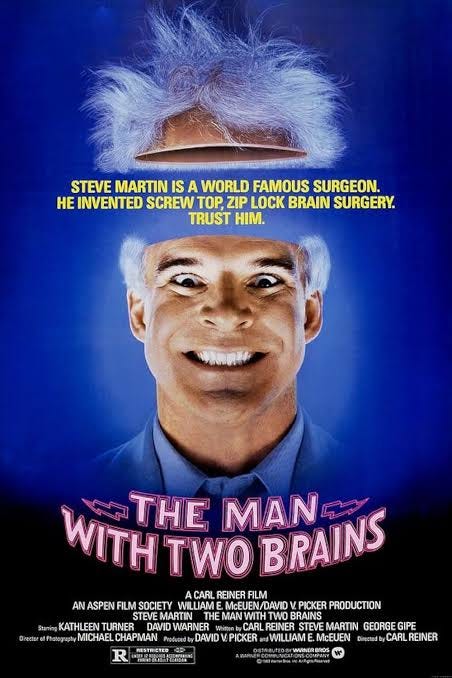
ADAM’S RIB
THE DEAD POETS SOCIETY
THE SECRET OF MY SUCCESS
AND NOW FOR SOMETHING COMPLETELY DIFFERENT
THE LEAGUE OF EXTRAORDINARY GENTLEMEN
MR. HOLLAND’S OPUS
GOOD MORNING, VIETNAM
BODY HEAT
THE MAN WHO KNEW TOO MUCH
THE MAN WHO KNEW TOO LITTLE
THE MAN WITH TWO BRAINS
THE OWL AND THE PUSSYCAT
Or, even more so...
Rule 3) Ambiguous might be best:
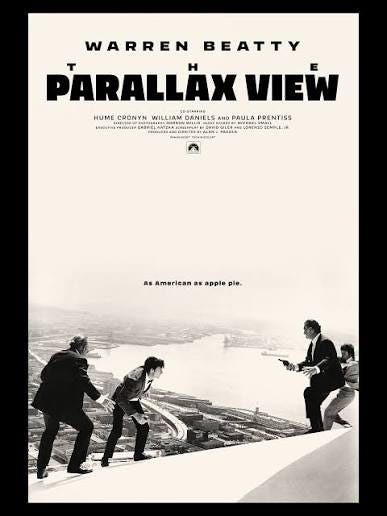
THE PARALLAX VIEW
THE 7% SOLUTION
NORTH BY NORTHWEST
BLADE RUNNER
BLOOD SIMPLE
THREE DAYS OF THE CONDOR
THE LAST OF SHEILA
THE WICKER MAN
THE THIRD MAN
Rule 4) Metaphor says more:
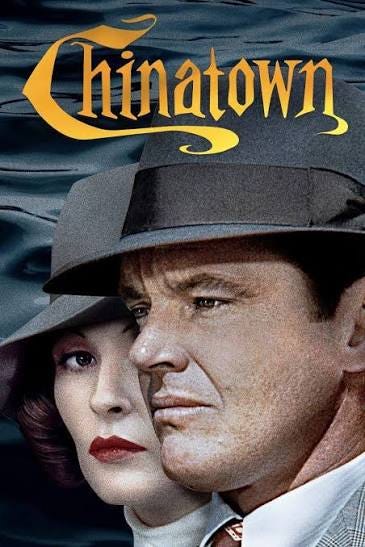
CHINATOWN
THE BIG SLEEP
GONE WITH THE WIND
EAST OF EDEN
A MURDER OF CROWS
TO KILL A MOCKINGBIRD
MILLER’S CROSSING
Rule 5) Consider the title on the poster or in the store.
Books can be hard to classify at a glance. Several years ago, Erica Jong’s steamy novel, FEAR OF FLYING was found in the “travel” sections of several stores, and in some others under “aviation” and “psychology”; keep this in mind when you pick your title!
So, then, how can lateral thinking aid in title selection?
My own method is to make a list of everything I can think of related to my project. I list facts, details, people, meaning, metaphors, everything that comes to mind. I then leave it alone for a few days (or even longer). I just think about it. Later, I come back and “respond” to the items in the list. I make another identical (or reversed, top-to-bottom) list right alongside the first for each response item. Then I relate them, source to response, followed by response related to the rest of both lists. I might do this three or four times over the writing of the work.
In the end, I usually have my title, even if it doesn’t come directly from the list. This is because the list eliminates things I can’t use or don’t need, helping me to know what I do need. Either way, showing me what it is, or showing me what it isn’t, lateral thinking helps me select my title. #
If you enjoyed this article please restack. And check my other posts via my avatar!
Excerpted from my book, LATERAL SCREENWRITING - Using the Power of Lateral Thinking to Write Great Movies
Wahab at Monday Matters has a great article on titling, too. Check it out, HERE.