

(This article follows Parts 1, 2, and 3)
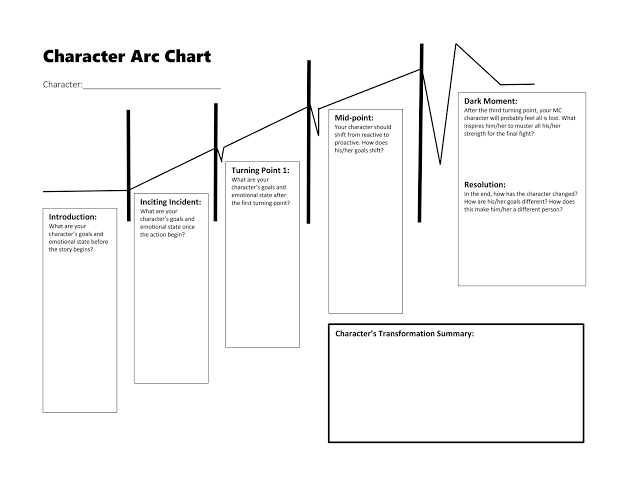
The Arc of Transformation
The approaches to screenwriting have become legion, with many being just new patterns of arranging what amounts to the lasting and key, fixed, attributes of storytelling. Through it all, though, like the most enduring faiths, three-act structure, though diminished, held a core group of proponents. It still does, today. I believe that the reason for this isn’t so much a loyalty to Syd Field or Aristotle, but to a non-articulated, undeveloped, but nonetheless intuitive affinity for the general accuracy of the three-part paradigm. Why?
First, the reason traces to this remarkable recurrence of threes: sometimes called the ternary unit (a model composed of three parts). We’ve seen (and will continue to see) the number three appear throughout our discussion of storytelling. We’ll call it the Three-Component Model. It might be seen as the minimum unit to result in a conclusion of meaning. One can have a single element in isolation yet conclude nothing definite about it. This is, perhaps, why it’s been said the Central American natives, when seeing the Spaniards for the first time, could not describe the ships. They literally could not see them as anything apart from the horizon. They had no reference for them, so the ships had no meaning. Only by the presence of an additional conditioning element can meaning be assigned. This, conditioned by that, means thus. (I’ll leave it to the pedants to determine the truth of the example)
But the real answer to why the three-act paradigm survives, I believe, is Field’s original insight that:
the Plot Point is a function of the protagonist,
and our addendums:
That this means structure itself is a function of the protagonist, and, usually one in change.
While the Aristotelian model required three parts with causality of meaning, this model requires the structural presence of an evolving protagonist (or evolving audience instead) to support, define, and apply Aristotle’s meaning. These insights are an improvement on Aristotle’s foundation. With such contributions in place, story structure emerges as:
The change in understanding that the protagonist undergoes through contention with the central dilemma within the story.
This is the deep structure, the true structure of storytelling, here called—forgive the “highfalutin” terminology--the protagonist’s Arc of Transformation. I am not alone in recognizing this. It is also the basis of Dara Marks’ book, Inside Story, and an aspect of it was observed by Linda Seger in her first book (IV-1). But it emerges again and again, directly, and by inference, in the words of screenwriters interviewed all the way back to Hollywood’s golden age, script gurus notwithstanding (IV-2). So, while the sequence approach is an eminently practical method for writing screenplays, it is not the entire solution. Writers need to be able to not only produce completed drafts, but also understand what they are completing. Our approach to the familiar three-part “paradigm” achieves this, allowing writers to quickly evaluate concepts, ideas, even proto-ideas for value as eventual feature films. It allows the writer to, in effect, see the movie in the mind’s eye.
Aristotle’s and Syd Field’s three parts are an elegant concept with parallels in joke structure (set-up, delivery, and punch-line), the Hegelian Dialectic (thesis + antithesis = synthesis), and Aristotle’s own logic paradigm, the Syllogism (major premise + minor premise = conclusion). These comparisons support and ratify the validity of the Aristotle-Field paradigm, as, in concert, they also ratify our observation that through that three-component model, this is how meaning and logic function at the deepest levels.
But the truly sublime ingredient in this tripartite concept is the unifying element of the protagonist as the key to a rigorous structure. It alone connects the three otherwise distinct parts, making it all a single consistent whole. The three parts by themselves are structure-like, even causal, but irrelevant to what matters in stories. If the events need be merely causal, any group of connected events would qualify as a story. Only by the connective tissue of meaning through the experience of the protagonist does the model find unity and transformative potential, and only with a hero in ascending (or descending) flux does the paradigm find true resonance within its audience. Only then is the story dynamic, only then of real use to its consumer. This insight is so powerful, in fact, that it finds support even when not consciously understood. In effect, even though there is a logical explanation readily available, for many writers, it just feels right. To illustrate our portrait of the various story structures briefly, then:
Aristotle’s Structural Model:
Three parts linked by causal meaning (through unity of subject, time, and place) = structural whole.
Syd Field’s Structural Model:
Three proportioned parts, linked by subject and causal (or related) meaning = structural whole.
Current Structural Models (including, Hollywood’s 3-Act Structure, the Campbell-Vogler, and the Sequence model):
Multiple parts linked by subject, causal meaning, and a (potentially static) hero = structural whole.
Our Structural Model (to this point):
Three usually proportioned parts, linked by subject, causal (or related) meaning, and a transforming protagonist/audience = structural whole.
Thanks to the insights of Aristotle, Field, and others, the structural model had advanced beyond mere parts linked by subject. And yet, contemporary understanding of this ignored the advance in favor of a simplified and sometimes inadequate model of surface-level parts linked only by subject with an incidental hero, i.e., one with no requirement of a unifying transformation.
So, what of the myriad models which have come along since Field? Well, there’s money at stake. With the opening of the weakness which the three act paradigm had in its definition of a long second act, those entrepreneurs, many well-intentioned, arose to supply the answer. Not 3 parts, but 5 or 6 or 12, or as many as your story needs, provided you use their methods. The funny thing is, they are all partly right, a fact many don’t even realize (IV-3).
Structure, according to that dictionary definition at the beginning, is defined as parts linked to make a whole. Aristotle and Field have contributed subtle enhancements which effectively make for improved stories. Campbell-Vogler contributed enhancements which aid story conception and assembly, but sometimes at the expense of both the Aristotle and Field improvements, and the contribution of the evolving hero.
Campbell-Vogler resonates thanks to its rich pedigree spanning all of human story-telling and myth. But, even as it draws from all of human myth, it fails to recognize the element of the transforming hero (and/or audience) that, of course, has been present as a part of mythic oral tradition all along. Its archetypes offer invaluable insights for screenwriting. Its structure, however, as reduced and described by Vogler, is plot-based, not character-based. It contributes mightily to the narrative, making for a strong tale, while, unlike its source, myth, often failing to yield the deeper truths within the characters or the meaning they’ve implied. In that Sumerian epic, Gilgamesh returned from his quest still a mortal, but did he learn from it? Did he grow in a grand, universal, human sense? Was it apparent? Did he transform beyond his surface-level love for his friend, Enkidu? Hercules killed his family, was sentenced to his Labors, but did he learn? Did he transform? And, what about Odysseus?
Virtually all the post-Field models offer positives which can aid in writing screenplays. Only the concept of the evolving hero (and/or audience), however, allows for a universally applicable structural model of use to writers and audiences, one that provides both story meaning, and audience resonance.
Conventional screenwriting is often limited or constrained by its own narrow notions of its world, its people, and its narrative possibilities. But screenwriting developed through lateral thinking approaches, by contrast, is open to a wider universe of possibilities, both within its world, and within its narrative potential. Being inclusive of all of the possibilities is what such screenwriting is all about. It brings to mind the story of the blind men all describing an elephant by feeling parts within their reach. One describes the trunk, a different fellow the ear, and another the tail. None can get it truly right. If there was a way to take the best of each description of the “story structure elephant,” what might it be? As it happens, there is a way of looking at structure which allows this, and we will examine it in Part 5. #
“A careless speech writer includes the word ‘paradigm’ in President Reagan’s speech on superconductivity. Yes, [as with George W. Bush’s ‘nucular,’ Reagan] pronounces it ‘paradijum.’”
---Paul Slansky, The Clothes Have No Emperor
_____
IV-1 – Making A Good Script Great, Dodd, Mead & Co., 1987, p. 4, Linda Seger writes: “Whether it’s a Greek tragedy, a five-act Shakespearean play, a four-act dramatic series, or a seven-act movie-of-the-week, we still see the basic three-act structure: beginning, middle, and end—or set-up, development, and resolution.”
The problem is, she argues for co-existence, the three acts with the greater number, solely on the plot level.
For those interested, I found this explanation of Shakespeare’s structural approach at http://www.enotes.com/taming/q-and-a/can-anyone-explain-how-shakespeare-uses-structure-217: “Shakespeare usually followed a standard Elizabethan Five-Act Play format when he wrote. In this format, the first act served as the introduction of plot, characters, and scene/setting. The second act contained rising action: those events leading up to the conflict (in a tragedy) or climax (in a comedy). The third act was the conflict/climax; this act represents a turn in power for our central character (described later). The fourth act is falling action: those events leading our central character from that conflict/climax to his or her resolution. And, of course, act five is resolution: what happens to our characters in relation to the plot. Those five acts are all joined by a central character who needs to be intricately involved in all five acts and their specific purposes.
“With that in mind, Kate is most likely our central character in The Taming of the Shrew (although an argument could be made for Petruchio also). Kate, her shrewishness, and the reason for Baptisa forcing her marriage are introduced to us in Act One (introduction). We see Petruchio meet her as a suitor and his early attempts at “wooing” her for a potential marriage (rising action). In Act three, she is married to Petruchio, and they immediately leave for Petruchio’s home (climax, and the change in power from Kate to Petruchio). In Act four, the taming process is in full effect as Petruchio withholds sleep and food among other acts that Kate must accept (falling action). And if Act Five, as the bet reveals to us, Kate is tamed (resolution).”
If one asks, as we suggest, “Whose story is it?” we see that it is Kate’s, not Petruchio’s. Why? Because she embodies the arc of change or transformation. So while one might argue for Petruchio being the protagonist, it is really Kate.
IV-2 – In Patrick McGilligan’s Backstory 1, pp. 300-2, screenwriter Casey Robinson described his work on DARK VICTORY (1939). “The New York play was a failure in 1935. They had tried three or four different endings while testing it on the road, and nothing worked. Robinson saw the play (about a woman dying of brain cancer), and had an epiphany as to what was wrong. (It lay in the meaning of the piece.) He asked his boss and mentor, Hal Wallis, at Warner Brothers to buy it for Bette Davis to star in. Unfortunately David O. Selznick already had the rights locked up. Robinson said, “So for three years I had a prayer every night: ‘Please don’t let David’s writers get the right ideas.’ Well, he had, I believe four scripts prepared. He had very good writers. But nothing was happening. Finally, I heard that Ben Hecht had said to him, ‘The only way to save this is to make it a comedy.’ And I guess they tried that. At any rate—and now we are into 1938—word comes that Selznick is willing to sell DARK VICTORY... The play was about a rich, spoiled girl who gets carcinoma of the brain and is going to die. In the second act she learns she is going to die and accepts it gallantly. Oh, there was a little sadness about it; she was in love with her doctor and that part is still in the picture. But what had happened is that they had played the third act in the second act. Where were they going to go? If she accepts death, this is the end... (By the actual third act) it was dissipated. It was all gone. And they just had a lot of gabble in the third act that meant nothing. There had to be, in the middle of the piece, a period of great rebellion against fate—of anger, which, of course, was mixed up with her love for the doctor. Also, the anger that she hadn’t been told, and so on...” So the narrative (of the play) was in three parts, but the Arc of Transformation was only in the first two. And Robinson saw, by the stage version’s construction, how the structure of the plot hurt the drama of the story’s meaning (and, so, the audience’s understanding).
In Screenwriters’ Masterclass, p. 211, screenwriter Scott Frank (GET SHORTY, OUT OF SIGHT, MINORITY REPORT) talks about the difference between the novel and the script of Elmore Leonard’s Out of Sight, “...the book was about her (Jennifer Lopez’s character) and the movie was about him (George Clooney’s character). She’s a great character but she doesn’t really change in the book, you can’t really explore anything.” With a film being, as Wm. Goldman says, essentially all structure, the writer must decide whose film it is, and that is dependent upon the story’s central spine (of meaning) and that Arc of Transformation all good screen stories possess.
IV-3 – Screenwriter, Nicholas Kazan (REVERSAL OF FORTUNE), in his interview in American Screenwriters, p. 248, says, “In essence, there are no rules with film. It’s like a dream: it can take many different forms. The important thing is that what happens should be continually surprising and in retrospect seem inevitable. If you have that it doesn’t matter what your structure is.”
(Stay tuned for Part 5)
Please Re-stack if you found this article of interest.