

FADE IN:
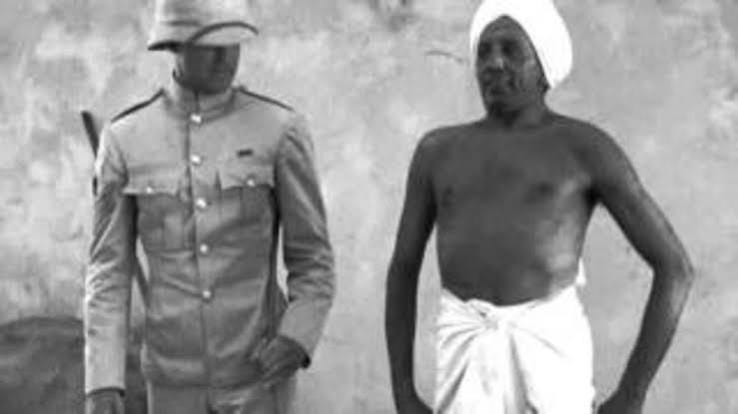
FULL SHOT – of the Colonel and the three sergeants at Din’s litter. The movement of the men in the background stops and they all come to attention, (The strains of the bugler sounding Last Post comes over the following scene) The Colonel looks from the three Sergeants to Din.
COLONEL - And here’s a man of whom the regiment will always be proud.
Each man is gazing intently at Din.
MED. CLOSE SHOT - of the three Sergeants and the Colonel.
COLONEL (CONT’D) - According to regulations he had no actual status as a soldier, but those of us who had the privilege of serving with him today know that if ever a man deserved the name and rank of soldier it was he.
Kipling has entered scene and is standing at the Colonel’s side.
COLONEL (CONT’D) - So I am going to appoint him a corporal in this regiment. His name shall be written on the rolls of our honored dead.
(he hesitates a moment then turns to Kipling)
COLONEL (CONT’D) - Let me see that last part again, will you, Mr. Kipling?
Kipling hands the Colonel the papers from his pocket. The Colonel starts to read.
COLONEL (CONT’D) - “So I’ll meet him later on..’
CLOSE SHOT of Cutter as he listens. He is deeply moved.
COLONEL’S VOICE - “At the place where ‘e has gone. Where it’s always double drill and no canteen.”
CLOSE SHOT of Ballantine as he listens with tears in his eyes.
COLONEL’S VOICE - “’E’ll be squattin’ on the coals. Givin’ drink to poor damned souls. An’ I’ll get a swig in Hell from Gunga Din”.
CLOSE SHOT - Colonel.
COLONEL (CONT’D) - “Yes, Din, Din, Din! You Lazurashian-leather Gunga Din...”
CLOSE SHOT of Mac. He too has tears in his eyes. He is choked with emotion as he listens.
COLONEL’S VOICE - “Tho’ I’ve belted you and flayed you - By the Living God that made you...”
FULL SHOT of Din’s figure on the stretcher.
COLONEL’S VOICE - “You’re a better man than I am, Gunga Din.”
CLOSE SHOT of Cutter. His eyes are full of tears.
GROUP SHOT. Two natives enter the scene. One covers Din’s face, then they pick him up. The Colonel salutes and Mac and Ballantine come to attention as they start to carry Din away.
LONG SHOT from the angle of the three Sergeants. The natives carrying Din join a line of other natives who are carrying similar stretchers. This procession is slowly moving toward the Hindu funeral pyre in the background. We hear the bugle sounding the last notes of Last Poet,
CLOSE SHOT of Cutter as he watches.
LONG SHOT of line of natives moving toward funeral pyre.
Over this scene the figure of Gunga Din appears in transparency. He is in the full regimentals of a Corporal in the Sappers and Miners, He straightens to attention and salutes. A triumphant smile floods his face. His eyes are full of pride and delight. (Over this we hear the Pipes and Drums from off-scene playing “Piborch of Donald Dhu”)
LONG FULL SHOT toward hill. The pipes grow louder and louder as the Highlanders march forward down the hill to the brisk happy tempo of “Piborch of Donald Dhu”.
From the end of GUNGA DIN, 10-26-1938 Draft, by Joel Sayre & Fred Guiol, from a story by Ben Hecht & Charles MacArthur.
In my book, LATERAL SCREENWRITING, in a chapter on creative idea-generation, I discuss one method of creating viable stories: update or transform a previous story into a fresh one. We’re probably all familiar with the example of Jane Austen’s novel, EMMA transforming into the movie, CLUELESS. And there’s the Lubitsch film THE SHOP AROUND THE CORNER updating to YOU’VE GOT MAIL. There are literally hundreds of examples of this, but several favorites of mine include:
MUTINY ON THE BOUNTY became RED RIVER – a voyage on the high seas became a cattle drive on the prairie.
HIGH NOON became OUTLAND – A lawman facing criminals in a town that has abandoned him became an inter-planetary lawman facing criminals in space.
THE TEMPEST became FORBIDDEN PLANET – Shakespeare’s tale of magic and mystery on an island became a tale of science fiction on a planet in another star system.
ROMEO AND JULIET became WEST SIDE STORY – Shakespeare’s tale of tragic love updates to Manhattan’s upper west side in the late ‘50s, with music.
Plutarch’s and Livy’s variations of the story of THE RAPE OF THE SABINE WOMEN became Stephen Vincent Benet’s THE SOBBIN’ WOMEN, which, in turn, became the musical, SEVEN BRIDES FOR SEVEN BROTHERS.
THE SEVEN SAMURAI became THE MAGNIFICENT SEVEN became BATTLE BEYOND THE STARS became A BUG’S LIFE – Heroes come to a town and drive off invaders.
THE PHANTOM OF THE OPERA became THE CANARY TRAINER by Nicholas Meyer. The tale from a certain detective’s point of view.
First, a digression.

At the outset of his film, PULP FICTION, Quentin Tarantino describes the tale as “Three stories about one story”. And that statement is the key to understanding its “Block Universe” structure (wherein all time: past, present, and future, happens simultaneously)”:
PULP FICTION (1994) is a film held up by many as effectively destroying structure because of its re-ordering and scrambling of causality, not to mention the traditional 3 acts. From an examination of the linear progression of the scenes through time, it seems to have the beginning partly at the beginning, and partly at the end, the end mostly in the middle, and the middle mostly near the real-time beginning.
Elsewhere on this site, I state that the key to story structure is to answer the question, “Whose story is it?” Find the protagonist, be “it” a person, a couple, a group, a town, a country, an idea, or even a metaphor (and, yes, I supply examples), identify “its” transformation (or, failure to transform, despite the need for it), and you have its structure (or, at least its deep structure, the meaning structure lurking beneath its plot).
If structure is mere connection of parts, then PULP FICTION is, while a structured assembly, to understate it greatly, a unique example. If structure is connection and support of parts, then, an only-the-gang-as-protagonist view achieves it. Tarantino, himself, signals this when he states at the outset, PULP FICTION is “Three stories about one story.” There’s only a single candidate for the “one story” in the film, and it’s the gang’s story. And this, I suggest, implies the title might better have been SCIENCE FICTION.
Perhaps the best way to “see” PULP FICTION’s “block story,” is to unspool the celluloid, heaped, in a pile before you.
But, as I wrote… I digress.
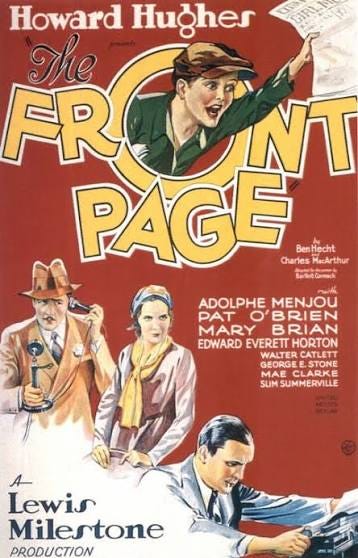
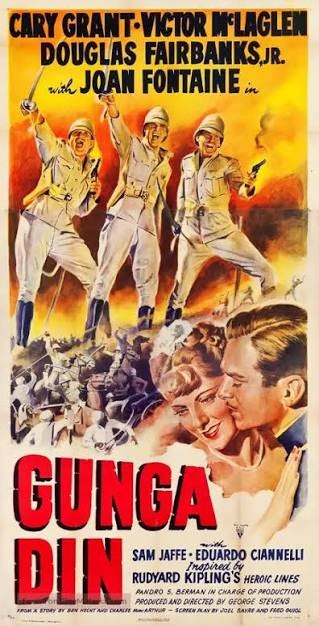
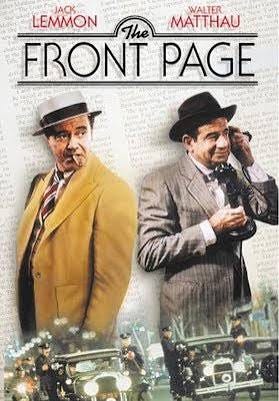
There are two interesting stories related to this approach. The first is found in screenwriter and author, Max Wilk’s book on Hollywood screenwriters from the golden age of movies, SCHMUCKS WITH UNDERWOODS (for those of you under the age of 40 that’s a keyboard that takes paper), Applause, 2004, pp. 177-8. Garson Kanin tells of the time screenwriters Ben Hecht and Charles MacArthur wrote GUNGA DIN (named after the Rudyard Kipling poem, but the story was theirs) and put it out for bid. Every studio but Columbia had made an offer. When their agent, Leland Hayward asked legendary Columbia chief, Harry Cohn why he hadn’t made an offer, he said he already owned it, that he bought it seven years earlier from the same writers, only then it was called THE FRONT PAGE (their hit play about the newspaper business, made as a movie at least four times, first as THE FRONT PAGE, then as HIS GIRL FRIDAY, then again, by Billy Wilder and I.A.L. Diamond in the ‘70’s with Jack Lemmon and Walter Matthau, as THE FRONT PAGE, and finally in the late ‘80’s, this time in the world of tv news, as SWITCHING CHANNELS – speaking of that, somebody ought to take it to the internet – are you listening, screenwriters?). Anyway, Hayward laughed at Cohn’s assertion.
“What’s so funny?” asked Cohn.
“GUNGA DIN, said Hayward, patiently, “has absolutely nothing to do with THE FRONT PAGE.”
“Have you read it?” asked Cohn.
“Of course I’ve read it.”
“And you don’t see it’s the same picture?”
“Harry,” said Hayward, “thank you very much. You’ve given me a great Harry Cohn story. I’ll be dining out on this for weeks.”
But when Kanin, who was relating Hayward’s story, read GUNGA DIN, he realized Cohn was right: Hecht and MacArthur had taken not only the story, but the characters of THE FRONT PAGE, changed the period, the locale, and the occupations. Kanin lauded Cohn for his sharp observation, but, in my view, the joke was on Cohn because GUNGA DIN was a hit. In fact, it became a classic, and nobody ever noticed its pedigree, if indeed it was, as he says. I find the similarity quite a stretch. Nonetheless, the principle (and, if true, Hecht and MacArthur’s ingenuity) is a lesson to screenwriters.
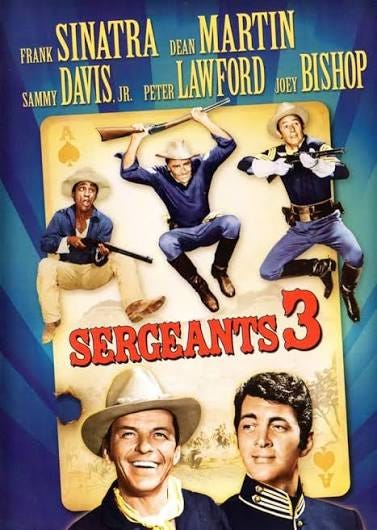
The other story is from screenwriter, W.R. Burnett, in BACKSTORY 1, p.78. Burnett describes how Frank Sinatra came up with the idea to “kid” GUNGA DIN:
“I got a call from ‘Swanie’ (H.N. Swanson, agent) to go to Columbia to have lunch with Frank Sinatra, which I did. Frank said he had an idea to take GUNGA DIN (1939) and kid it. Good idea. But Frank didn’t know what to do with it. So I went home and thought about it and figured out a way to do it. I put it out West with this fanatical tribe of Indians, and that’s SERGEANTS THREE. I wrote a treatment and gave it to Howard W. Koch, the producer... Finally he got him on the phone and said, ‘Frank, what do you want us to do?’ Frank said, ‘Write the script.’ I said, ‘I wrote it.’ Frank said, ‘Howard, what do you think?’ Howard said I think it’s swell.’ I don’t think Koch ever read it. I don’t think Frank ever read it. So they shot my first draft. Scared the hell out of me, you know.”
So, if anyone’s ever stuck for an idea, think back to those stories, books, and films that have really touched you or that you love. Is there a way to update one? Can you put the essential events into a new milieu, a new setting or genre, and make it new again? There’s always that idea about updating THE FRONT PAGE to the internet era ala YOU’VE GOT MAIL. I don’t ask for anything but a thank you in the credits. #
FADE OUT
Quote of the Post:
“You’re a better man than I am, Gunga Din.”
---Rudyard Kipling
Please Re-stack if you found this article of interest.