

You know you’re a screenwriter when…
You are given a screenplay a colleague, probably a friend, has written, and you are hired to…
Rewrite…
Revise…
Punch-up…
Fix the dialogue…
Add a woman’s (or man’s) (or [insert unique quality here] point-of-view…
…thereby bestowing your talent on a potential Hollywood blockbuster. Or, failing that, a classic!
In the business they used to call it “writing behind him,” (or… her) (or… them). And, the truth is, you don’t even know who may be writing behind you!
Does this happen in book publishing with novels? Nope.
(Yeah, there is the odd celebrity who decides he/she wants to be a novelist. The publisher sees dollar signs, but realizes they must turn the VIP’s manuscript over to a ghost writer to make it publishable. But that’s fairly rare.)
Ok, then, what about stage-plays? Nope. In fact, you need the author’s permission to change even a single word. Also, in fact, the Playwright often has greater power over a stage adaptation of a film, than the original screenwriter(s) had over their original screenplay!
I’m mainly a writer, but thanks to an acquired neurosis due to the writing, I also collect movie scripts, mainly as PDF files on thumb drives. I have thousands
(actually, I have tens of thousands--I know: pretty weird--but once you start, it kinda never stops--it’s like a Grail quest where there’s always another Grail).
I have multiple drafts of many individual screenplays, illustrating how they changed over time.
Tip — to inoculate yourself against this neurosis, become a reader for screenplay contests.
Anyway, it’s harmless (and it keeps me off the streets). I’ve been hoping to find a library somewhere that would take the collection—wouldja believe, three Universities, so far, have turned it down? And that amazes me because it doesn’t even require shelf space, just a computer server, and it could attract researchers, not to mention serving as a resource for students.
Recently, I came across a screenplay, which, when it comes to movie scripts and the sheer number of contributing writers, well… this one made even MY jaw drop!!!
Movies aren’t written, you see. They’re RE-written: first, by the initial writer (or writers, sometimes a team of 2), and later, quite often, by more writers. Studios buy (or generate) the stories and/or screenplays from which they develop their movies. That means that, unlike stage-plays, or book-fiction, they, the studio or producer(s), own the material, the copyright. So, once a writer gets a movie deal, he/she is lucky to stay on board for re-writes—which are inevitable thanks to directors and actors wanting to put their own stamp(s) of authorship on the material. So, the writers, the original authors (!!!), are paid well and then unceremoniously booted from the project. So, then…
It’s not unusual to see screenplays with cover pages listing 5 to 9 writers. I have hundreds of these. I say 5 writers, because LOTS of scripts are written by teams of 2, and then, often, are RE-written by another writer or team of 2, so 3 to 4 are very common, legion, in fact, in the history of Hollywood. They come in all stripes: there are married or partnered teams (such as Ruth Gordon and Garson Kanin,
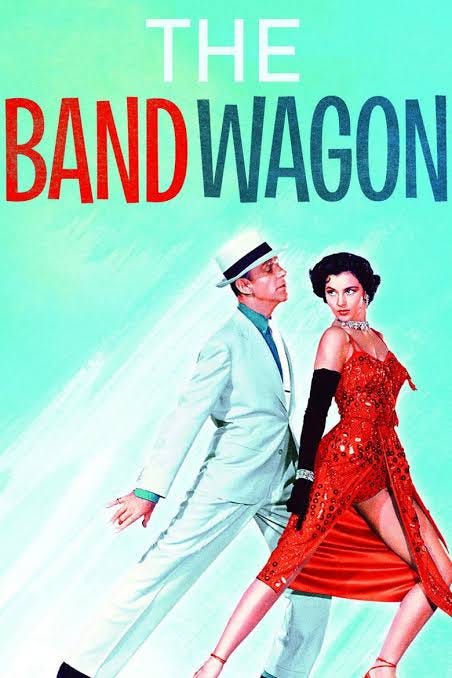
Betty Comden and Adolph Green,
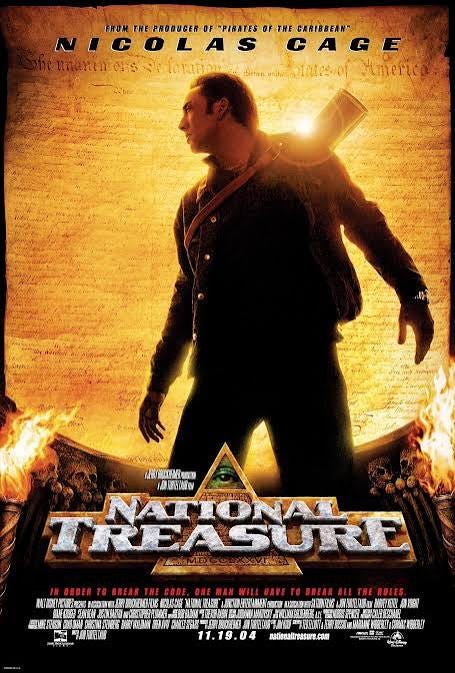
Marianne and Cormac Wibberley),
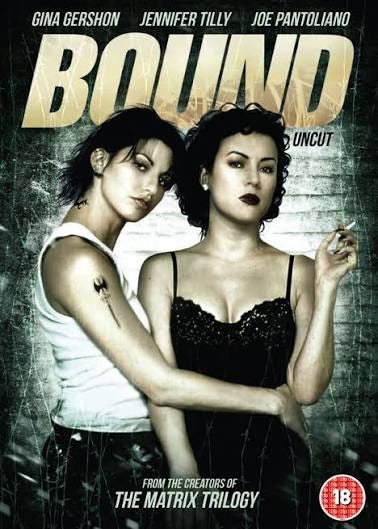
sibling teams (such as the Wachowskis,
the Coens,

the Farellys,
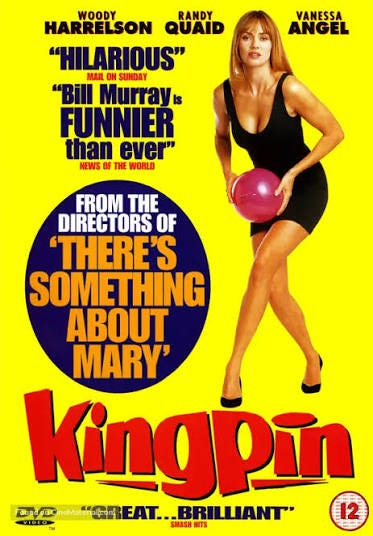
and the Duffer brothers),
and buddy teams (Ben Hecht and Charles MacArthur,
Billy Wilder & Charles Brackett,
Billy Wilder and I.A.L. Diamond,
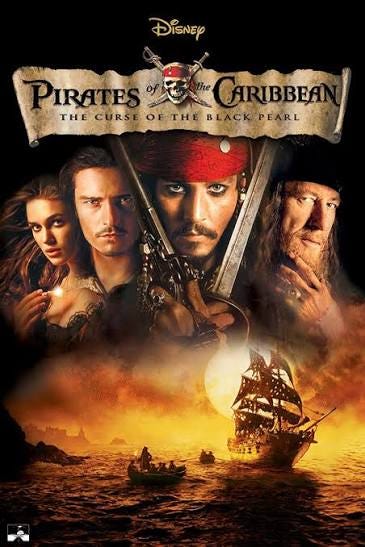
Terry Rossio & Ted Elliott,
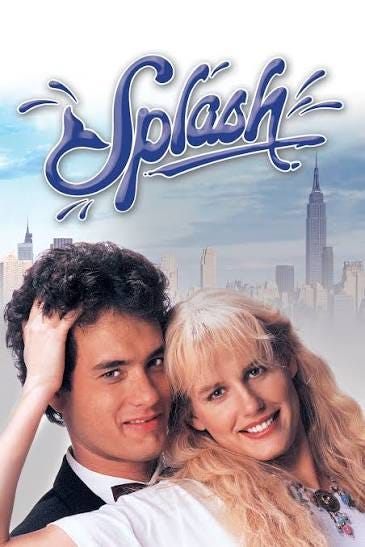
Lowell Ganz & Babaloo Mandel,
et al).
But studios believe a script can always be made better, more effective, made to sell more tickets. They’re always looking for ways to appeal to a wider audience. They love what they call, “four quadrant” movies, ones that appeal to males and females under the age of 25, and males and females over 25. The lines are drawn because often films have appealed to single quadrants, rather than all four. And, now, with the international market and streaming, they look to fit those markets, as well. So, they second-guess scripts, looking for ways to hit those areas and demographics. When a script comes in that they want to produce, the prevailing wisdom is that the initial writer(s) have done all they can, and new ones are needed to take a script further. The result is a title page with more names than some phone books (remember those?). And they’re willing to pay for each iteration of a script they might have already paid six or seven-figure money on. All in pursuit of something they can hardly articulate when pressed. “Make it better!” “Give it an ‘urban’ feel! You know, dangerous!” (all while not recognizing how racist that is!)
So, this is all pre-amble before I offer some examples of scripts that were “made better”. I did a search within my archive, and quickly found ten. Based on the likely money spent and the number of writers listed, these would apparently be expected by their studios to be the most profitable and critical masterpieces Hollywood has ever made. Right? Why spend the money, otherwise?
Illustrating that this is not a recent phenomenon, the first title is almost a century old, and considered in some quarters a classic. The last two scripts can’t be named because the films from them have not been released, and are still “in development,” so technically, they are not supposed to be circulating. But, the fact that they’re still listed on IMDb as “in Development” despite being that way OVER A DECADE, kinda says it all, doesn’t it? The years listed are the final ones on the cover page, not necessarily the release year. After the writers I list ball-park figures (from their IMDb pages) for their budgets followed by their worldwide gross in either thousands (“k”), or millions (“m”). I note that to reach a profit, due to possible profit participation and P & A (prints and advertising), a studio film generally needs to gross 2.5 to 3 times the budget, and sometimes more. Two of the scripts haven’t yet been released, over a decade, now, as I said, since their draft dates. Since IMDb lists them as still in development, there are probably even more writers, now. When a name or a team of names appears on a cover page, that signifies an individual draft. So, each of these name appearances are final draft iterations. And, bear in mind, the initial or first name(s), i.e., the original writer(s), represents the “final” draft iteration of the initial writing of the script. I have heard some writers say they re-wrote their script 40-50 times before first submitting it, only for the real fun to then start: RE-Writing. And each of those cover page draft iterations from each of the later writers also represents the last (or final) draft iteration before they submit. So the drafts listed on a cover page may represent scores, even hundreds, perhaps in the worst cases, thousands, of passes by all of the writers. So, the listed final drafts are merely the iceberg tips:
FREAKS (1932) 6 writers, 6 “final” drafts (Budget - $311k; Gross $5k)
MY FELLOW AMERICANS (1996) 8 writers, 2 of them listed for revisions three times each; therefore 14 “final” drafts (Budget $21.5m; Gross - $22.3m)
DEEP BLUE SEA (1998) 8 writers, 2 of them listed for revisions twice, therefore 12 “final” drafts (Budget - $60m; Gross - $165m)
ANY GIVEN SUNDAY (1999) 10 writers, 1 of them listed for revision twice; therefore 12 “final” drafts (Budget $55m; Gross - $100m)
I NOW PRONOUNCE YOU CHUCK AND LARRY (2006) 15 writers, 1 listed for revision four times, 2 twice; therefore 23 “final” drafts (Budget - $85m; Gross $187m)
MEET DAVE (2007) 9 writers, 2 of them listed for revision twice; therefore 13 “final” drafts (Budget - $60m; Gross - $51m)
KNIGHT & DAY (2009) 10 writers, 2 of them listed for revision four times; therefore 18 “final” drafts (Budget - $117m; Gross - $262m)
VACATION (2012) 8 writers, 2 of them listed for revision three times; therefore 14 “final” drafts (Budget - $31m; Gross - $107m)
· [Unnamed - IN DEVELOPMENT] (2012) 22 writers so far; 14 listed “final” drafts (Remains in Development, 14 years after the draft date!)
[Unnamed - IN DEVELOPMENT] (2014) 10 writers so far; 5 listed “final” drafts (Remains in Development, 12 years after the draft date!)
(Notice how the trend over time is toward a greater number of writers?)
The first thing you should be aware of is that the copies I have are not necessarily the actual final drafts that may exist(!!!). In fact, there could be drafts with even more names (and, so more drafts EACH) that haven’t leaked out to the collector community! Think about that. Then consider the titles. Masterpieces? I would venture: NONE! Blockbusters? We know from the numbers: NONE!
But, none of these even comes close to…
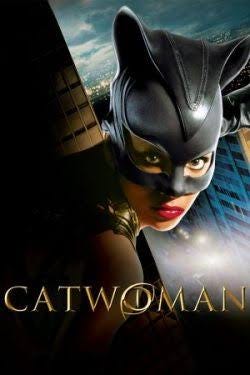
CATWOMAN (2004) 14 writers, 2 of them listed for revision two times, 1 five times, 1 six times, and 1 seven times! For a total of 34 NAME ITERATIONS, 34 “FINAL” DRAFTS!!! (One “writer” name, listed twice, is “Production Staff”!!!) (Budget - $100m; Gross - $82m).
I’ll lay odds there are veteran screenwriters out there who have stories that make these examples pale in comparison.
Only in Hollywood. #
If you found this article enlightening, please re-stack.
And then...WHAT HAPPENS WHEN THE SCRIPT IS TOTALLY REWRITTEN BY THE STAR DURING FILMING? WHOLE SCENES GET REDONE ON THE SPOT. SO MUCH FOR THE DIGNITY OF THE SCREEN WRITER. A WELL RESEARCHED ARTICLE. THANKS