

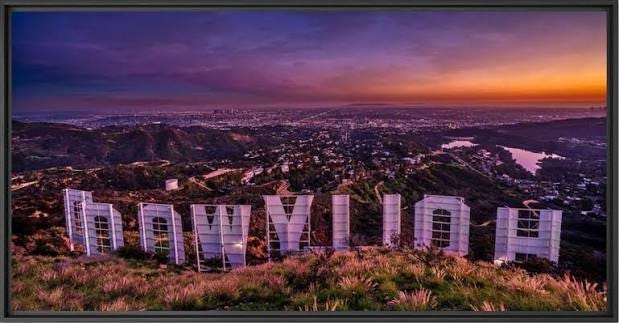
I’m novelizing a screenplay I wrote recently, primarily because, apparently, “Hollywood” won’t consider it, won’t even read it. The reason is the setting: Hollywood, itself. The film industry doesn’t like to do movies about itself. Oh, it does them, but when it does, they inevitably have to be based on classic novels, or written and/or directed by A-listers, people with names like Altman, Coen, Chazelle, Tarantino... you get the idea. Admittedly, I knew that going in, but I hoped the pitch could win them over. Nope, not so far. So, for my story to live, it’s gonna have to be a book first. And if it succeeds, “Hollywood” can come calling and pay the necessarily higher price. Or, not.
Anyway, I know the story is strong, and I refuse to let it die because of some self-absorbed industry paranoia that doing so may be seen as self-critical, disguised satire, a hit-piece, or, that “movies about the movies won’t sell tickets”.
There are lots of good reasons to make such films. First, Hollywood has an allure: audiences are fascinated with the film business. Then… a story that’s a page turner, funny and clever--in other words, a “movie,” --will attract a director, stars, and that audience.
THE PLAYER,
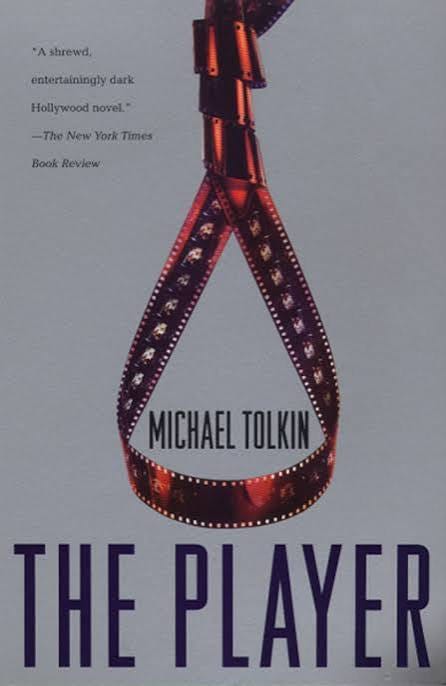
GET SHORTY, LA LA LAND, BABYLON, and ONCE UPON A TIME IN HOLLYWOOD
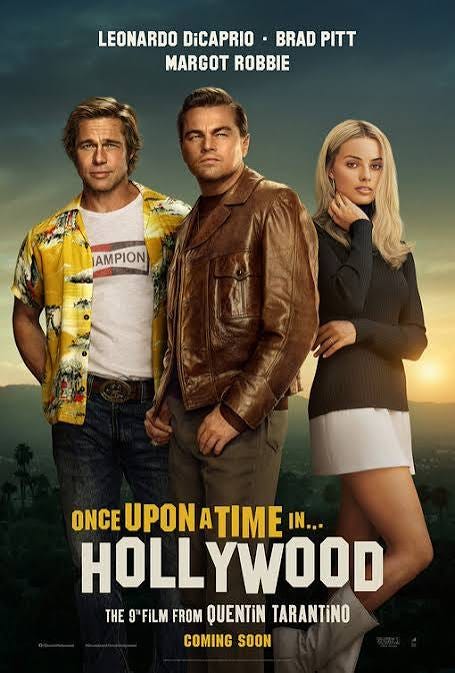
showed that actors love to be associated with the setting, the business, and the lifestyle. Some of the greatest films ever made have been about Hollywood, filmmakers, and filmmaking: SUNSET BOULEVARD, SINGIN’ IN THE RAIN, Francois Truffaut’s DAY FOR NIGHT,
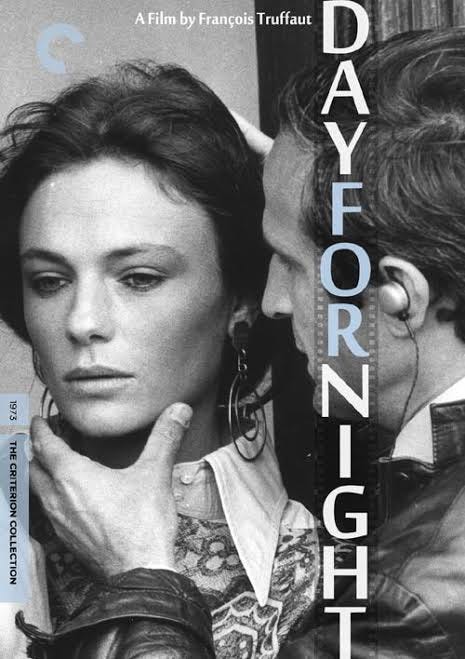
and Federico Fellini’s 8 ½.
Any argument that the audience can’t relate to Hollywood is simply not true. People didn’t know what being a lawyer, cop, or doctor was like until seeing them on screen. If you can find the stakes in a story, make it sexy, and give the audience people they care about and are charmed or fascinated by, the story can be about anything. And then, there’s the cost: FFS! The setting’s already there!!! The world, itself, doesn’t have to be built!
Lastly, in recent times there have been several very successful films about Hollywood: The $90M, ONCE UPON A TIME IN HOLLYWOOD grossed $400M. The $30M, GET SHORTY grossed $115M. THE PLAYER cost $8M, and grossed $22M. It was nominated for three Oscars and, internationally, won 24 awards!
So, my story is set in the Hollywood of the 1990s, during what has become known as the era of the “spec” script (speculatively-written screenplays, rather than from books, articles, stage-plays, or producer-generated ideas). According to Scott Myers’ just-published survey of the phenomenon, while barely selling in other eras, at their peak in Hollywood in 1995, spec scripts were selling at the rate of more than 3 per week!
That is the setting, period, and milieu of my story, DARKNESS CALLS ME. A black comedy with its roots in real events, nonetheless, it’s NOT a thinly-disguised true story. The “logline”:
A “boy-wonder” film executive with an obsession for winning, scams his studio for millions with a dummy script that the whole town believes is “genius,” then sends it straight to “Development Hell” so he can walk away with the cash, only to find he’s not the only “shark in the tank”.
To use that abominable shorthand the industry often uses to put a “handle” on scripts, it’s kinda “THE PLAYER meets THE STING”. And it’s actually rooted in my own experiences back in the ‘90s as a Writers Guild Signatory Literary Agent. It’s also based on a criminal case which the arresting FBI agent called, “the cleverest scam he’d seen in 25 years with the Bureau”. So, now it’ll be a novel, with the screenplay waiting in the wings.
And to generate a kind of internal “zeitgeist,” I’ve been re-acquainting myself with Hollywood, and some of the fiction set there. I’ve been reading (or re-reading) everything from Nathanael West’s THE DAY OF THE LOCUST,
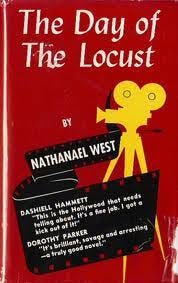
…to F. Scott Fitzgerald’s un-finished novel, THE LAST TYCOON (also his “Pat Hobby” short stories), and on to Peter Lefcourt’s THE DEAL, and Michael Tolkin’s original novel of THE PLAYER. I’ve also read Tom Dardis’s superb non-fiction book about the Hollywood years of Fitzgerald, West, Faulkner, and others: SOME TIME IN THE SUN. It all had the effect of demonstrating that, as someone once said, history doesn’t exactly repeat… instead, rather, it “echoes”.
I’ve always been a big fan of detective and mystery fiction (as one of my books shows), and one of my favorite films is CHINATOWN. I remember reading an interview with the film’s screenwriter, Robert Towne, talking about how he wrote it: he had read the Philip Marlowe novels of Raymond Chandler, and he had seen a photo spread in an L.A. newspaper of “Raymond Chandler’s Los Angeles”. It brought back nostalgic memories of some of L.A.’s past and places. So, his “head” was immersed in that world, in that time. While my story was not set in the L.A. of the 1930s, I found Towne’s process enlightening, so I followed his lead.
In that interview, recalling the older Los Angeles, Towne cited a book I had never heard of: John Fante’s ASK THE DUST
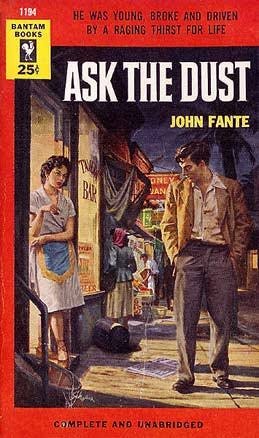
Towne also wrote and directed a film adaptation of it, released in 2006, starring Salma Hayek and Colin Farrell:
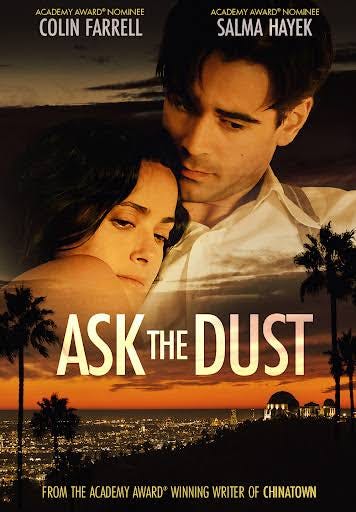
I found a copy of the novel in a second-hand bookshop, and set about reading it. At a glance, it looked like a potboiler in the vein of James M. Cain’s THE POSTMAN ALWAYS RINGS TWICE. I have to admit, the book did not look like something I’d have chosen for pleasure reading. Even the title seemed odd and decidedly weak.
At first, reading it was a slog. I didn’t find the protagonist relatable, and I found the relationship and behavior of the principles and even the peripheral characters off-putting and bizarre. But, I stayed with it. It’s a short novel, and, as I progressed, I began to see what Fante was doing: the subtext was entirely the story, not the plot. The narrating lead, Arturo Bandini (a surrogate for Fante, himself, and his L.A. experiences; also the subject of three other Fante novels), began to pull me in. The other lead, Camilla Lopez, had that effect, too. Their relationship was startling, volatile, magnetic. Slowly, I began to be seduced. And by the last third of the book, I was unable to put it down. Fante’s minimalist ending was so powerful, so devastating, and so utterly understated, I’ll agree with the New York Times: “Unforgettable”. And at the end, I finally understood how perfect that title was. Put your preconceptions aside. Throw away your unfortunately “built-up” expectations (sorry). And don’t watch the movie first. Just find and read John Fante’s ASK THE DUST. #
If you found this article enlightening, please re-stack.