

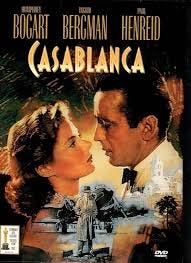
Someone asked me recently why CASABLANCA was a flop when it was released but became a classic in later years. I didn’t think it flopped, so I checked:
According to one source, the five top grossing films of 1943 were (North American):
1. This Is The Army - $19,500,000
2. For Whom The Bell Tolls - $17,800,000
3. The Song Of Bernadette - $12,500,000
4. Casablanca - $5,406,535
5. A Guy Named Joe - $5,363,000
Only 5 mil? Well, adjusted for inflation, Casablanca’s gross would be $101,230,131 today. So, it was the fourth highest-grossing film of 1943. IMDb claims the 1943 number was around $1 million lower.
Not too shabby! But when was the last time you watched THIS IS THE ARMY?
Still, how/why did it become the massive classic some put above even CITIZEN KANE in later years?
I can only speculate. But it seems clear to me that the essential story is nothing really exceptional. As I have written elsewhere, there’s a belief among some in Hollywood that good films are written, but great films are cast. In other words, the right actors can put a good film over the top.
CASABLANCA was lightning in a bottle. The screenplay had at least four writers, though the Epstein brothers (Philip G. and Julius J.) somehow got the lion’s share of the credit (and the Oscar), probably because of their Hollywood connections and ranking as “A-listers”. Still, it was based on an unproduced stageplay (“Everybody Comes To Rick’s,” written by Murray Burnett and Joan Alison). Warner Bros. claimed it owned the rights to the play, and prevented it from being produced. Eventually, in 1986, 43 years after the film’s release, the rights reverted to Burnett and Alison and they received $100,000 each. The play finally realized production in 1991 and ran 6 weeks.
While Howard Koch received co-”screenplay by” credit, the other writer, Casey Robinson, probably had a legitimate claim on at least some of the credit, as he was said to be responsible for the romantic aspects of the film (most fans consider Rick and Ilsa’s relationship the most important part of the story). Koch, the only one of the screenwriters who was involved during production when the half-finished script was actually completed, was a wet-behind-the-ears screenwriter who later published the script and his reminiscences of the experience. He has been credited by those in-the-know with the political aspects of the film. Despite being out of the picture when the script was only half-finished, the Epsteins (who are credited with the structure and dialogue) dismissed Koch’s contributions. This was still in an era when dialogue specialists were singled out—films of Shakespeare’s plays actually included an “Additional dialogue by” credit! In fact, one of the Epsteins called the script for which he won an Oscar, “slick shit”. Casey Robinson had originally found the stageplay and suggested it to the studio, toiled on the initial screenplay, and yet, ended up getting no credit. Both the Epsteins and Robinson claim to have originated the ending, and both have described where they were when they came up with it.
When the film was shown in the city it was named for, the audience laughed at its depiction of their town.
In hindsight, the fact that it was produced before the war was won, in fact, still in doubt, may be a factor in its success. It embodied a kind of hope that everyone who saw it in the following years knew would come true. So, when Bogart lets Ingrid Bergman go, everyone feels the power of his sacrifice, and understands it’s right. They agree with the need for his decision, and relate to the strength it took to make it: for the good of the world, in effect, for the good of us, we who need to live in a world free of tyranny. So, though Rick’s and Ilsa’s lives “don’t amount to a hill of beans,” these kinds of sacrifices were needed. And that deserved our respect. It wasn’t about a nightclub full of misfits during a smaller, Europe-centered war, as the play seemed to imply, but, instead, about how to live when the whole world was on the line.
Even then, the film took a long, long time to be regarded the classic it became. So…
What changed? Primarily the rise of “the cult of Bogart”. Thanks to a few influential critics like Peter Bogdanovich:
Bogie in Excelsis | Esquire | SEPTEMBER 1964
…and a cool poster.
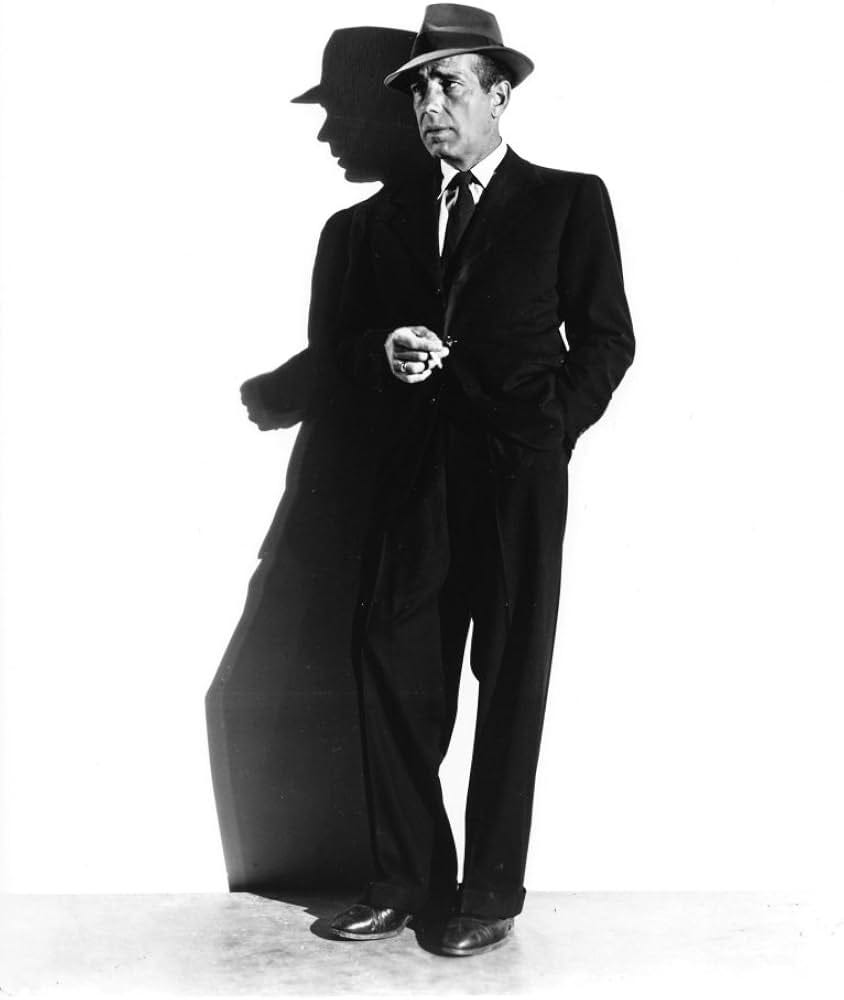
…that showed up just as baby boomers were coming of age, seeing films “on campus” recommended by European (read that: mostly French) critics, and World War II was being immortalized on film and television. And then, CASABLANCA began showing on the small screen over and over. That critical mass smacked the zeitgeist right between the eyes.
Then, PLAY IT AGAIN, SAM…
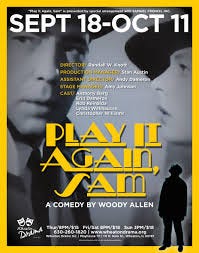
…hit Broadway, and then Hollywood, and Mr. B had become reborn. It was so pervasive even the unique way Bogart held his cigarette—kinda hidden, out of view, less obvious—was cool when your parents waved their legal ones in your face. Little Feat’s song, “Don’t ‘Bogart’ that joint, my friend, pass it over to me,” resonated with a counter-culture looking for things to make its own.
So, CASABLANCA was no flop, but it did benefit from a number of fortuitous events, like Japan forcing America to enter the war, endless re-runs on television, Baby-Boomers going to colleges full of film societies showing the films the French New Wave told them were good, some decent writing with some hot, well-connected screenwriters, and, of course, the casting.#
Please Re-stack if you found this article of interest.