

I’m a movie fan, but I am not obsessive about it to the point that I watch a film over and over. I know people who do that (my wife, for example), and I admire their ability to enjoy something so thoroughly and so frequently. But for me, such single-minded attention to anything ends up making it something I eventually no longer ever want to see again.

I carefully manage my movie likes. I’ll avoid seeing a favorite for years so that it can get back as closely as possible to the experience it was when I first saw it. This, too, has its problems, however. I remember seeing Ken Russell’s THE DEVILS while in college. I came out of the lecture hall it was shown in by one of the film societies (remember those?) literally wiped out by it. It led to a session with friends and way too much beer, where we argued over it into the wee hours. Then I finally tracked down a copy on VHS many years ago and watched it again. “What was the deal?” I kept saying to myself, as it droned on. Sometimes, it’s true, you can’t go home again.
_____
UPDATE!
Or maybe you can! THE DEVILS just got a restoration with the most dramatic and effective cuts restored. It was just re-released for a limited run (10-16-2026), and will likely be appearing on disk (probably Criterion) soon. So it’s worth re-visiting.
_____
So films matter to me. Because I husband my interest in favorite films so, I suspect mine matter to me a good deal more than do others being re-watched “for the 90th time in two years” by most other viewers. Am I being elitist? Let me explain. I like a well-done film just as much as anybody. But if it has shown me all it has, then the cute line or the clever reveal or the amazing car chase just aren’t enough reason to go back (BULLITT and THE FRENCH CONNECTION being rare exceptions).
CAVEAT: I will admit, here, a bias toward older films. I prefer films from the so-called “Golden Age” (the late 1930s - through [with film noir] the 1950s), into the 1960s, and up through to maybe the turn of the 20th Century. Since around the mid-1990s I much prefer television and the streaming of long-form stories such as THE SOPRANOS, BREAKING BAD, OZARK, etc. The advent of the theatrical blockbuster, beginning with JAWS, began a slow decline in Hollywood films that continues today. In fact, I wrote a book about it: THE LAST REVEAL - Movies, Screenwriting, and the Decline of Western Cinemazation. So, with that in mind, let’s look at some films that generate, at least in me, reasons to “go back”.

Take, for example, THE SIXTH SENSE. This is a movie that is just about as clever as they get, and yet, unlike something like MEMENTO, it remains an audience favorite. It is a marvelously worked-out deception, and was a great first viewing experience. But, I’m sorry, it blew it all for me right there, and there’s nothing more. Believe me, I looked. I can’t go back except to study it in the clinical sense. And that’s okay. But for sheer viewing pleasure and discovery? Well… I went back to MEMENTO.
The reason is that, intrinsic to the films I return to again and again, is an element of ambiguity. I didn’t initially realize this, but later, when I was examining my habits, I found the common element was that they all had a quality of ambiguity. Each of the films that drew me back had things about it that I couldn’t pin down, couldn’t understand, couldn’t solve. And when I watched them again I often found new things in them that led to even further mysteries.

Now, before someone asks if I ever resolved some of these, I have to say that, yes, I have. And, once done, I find that, with rare exception, the films fall off my watch-again list, thereafter. This has happened with PULP FICTION, THREE DAYS OF THE CONDOR, THE BIG SLEEP, NORTH BY NORTHWEST, and THE PRIVATE LIFE OF SHERLOCK HOLMES (though I’m holding out hope for someday seeing the 80 minute longer road-show version if a print is ever found—I recently found the script, and the cuts are a revelation!). It has almost happened with MEMENTO. It has not yet happened with MIRAGE, VERTIGO, CHARADE, CHINATOWN, THE PARALLAX VIEW, WINTER KILLS, THE THIRD MAN, THE CONVERSATION, THE TENANT, or LOST HIGHWAY, to name a few.
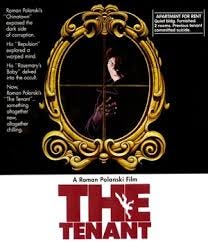
Ambiguity is an element that, when present, provides the film with a density, a quality of reality—there’s an actual world there—missing from most films. I liken it to reality because life always has unanswered questions lurking out there on the fringes, and occasionally right there in the room with you. If the film’s plot is the iceberg tip, then the ambiguous elements are the rest of the iceberg, the hidden part below the surface. And, irony of ironies, TITANIC is one film to which I can’t go back. Beyond the fact that it’s utterly depressing, there’s no there there. The iceberg tip was apparently enough to sink TITANIC for me.
Something similar happened for me with the MATRIX films. The first film in the “franchise” was delicious: engaging, exciting, thought-provoking, and it left me with endless questions and speculation. But as the sequels emerged and answered them, while attempting to pile on new mysteries, they drowned me in excess, and eventually lost me, utterly. Not nearly so much, though, with the HARRY POTTER films, the three LORD OF THE RINGS films, or THE DARK KNIGHT franchise. They continued to engender interest and wonder sufficiently to draw me back in again and again. I can go back to almost anything by Alfred Hitchcock until somewhere around MARNIE, and much after that (TORN CURTAIN, TOPAZ, FAMILY PLOT), other than FRENZY, I go elsewhere. So…
Films without some degree of ambiguity aren’t just facile, they are often artificial. They amount to pictures of life, rather than life, itself. Films utilizing ambiguity are far better facsimiles of life, because, like life, they offer the promise of more. I’ll take Peter Weir’s PICNIC AT HANGING ROCK over Terence Malick’s BADLANDS for a re-watch every time. Ditto for Robin Hardy’s THE WICKER MAN (1st ver.)


over most of what horror films have become since perhaps the late 1970s (with the exception of HALLOWEEN, Peter Medak’s 1980 ghost story, THE CHANGELING, and the resurgence in the genre we’ve been seeing in the last 10-15 years, or so). Maybe this is why I can keep going back to films by Stanley Kubrick while, with a few exceptions, and despite liking them initially, staying away from repeat views of films by Martin Scorsese. In his book, “Eyes Wide Open,” about the writing of Kubrick’s final film, EYES WIDE SHUT, on p. 75, screenwriter Frederic Raphael cites Kubrick saying, “Did you ever see the movie they made called 2010?” … “Know what they did? They explained everything. They told you what everything meant. Killed it. You tell people what things mean, they don’t mean anything anymore.” (italics, mine) It’s similar to what Paul Schrader once said about “on-the-nose” dialogue, that it stops the film dead. Explaining everything, rather than letting audiences find any meaning where they can, where they will, reduces the meaning to the trivial. Why? Because the audience is no longer a partner in the experience of the protagonist, they are no longer inside the narrative with him/her, coming to the meaning as they could’ve, as they should’ve. They are external observers, clinically dissecting the story after-the fact. And it puts brackets around the meaning, it limits it such that it discourages members of the audience from assigning or adding their own meaning, as well.
Even films that are hyper-realistic (SAVING PRIVATE RYAN), fantastic (OH, BROTHER, WHERE ART THOU?), or completely artificial (EDWARD SCISSORS-HANDS), yet present a consistent universe, nonetheless have, through the presence of a quality of ambiguity, the opportunity (incredible as it may seem) to gain a quality of reality. This makes for a deeper engagement, a far stronger story experience. So, rather than tying up all loose ends, the wise filmmaker leaves some strings hanging, some doors closed, yet letting us hear the muffled talking from within. And, with it lives a universe of possibilities. #